CrowdNoise set out to reinvent how fans support college athletes through community-driven funding and engagement. Despite a compelling idea, the product lacked a clear value proposition because it was buried beneath an ever-expanding set of features that made it difficult for users to understand, trust, or adopt. This created an opportunity to refocus the product around a clear, testable foundation and re-architect the app’s UI to better support core user motivations and drive engagement.
CrowdNoise had a genuinely novel idea: let college sports fans invest directly in their favorite athletes and teams through NIL (Name, Image, and Likeness) funds — a model newly unlocked by recent changes in law. But the early product buried the lead. The core value proposition was unclear, and the experience lacked the focus needed to build around it. When I came onboard I established two main goals: 1. Reorganize the product around this singular idea, and 2. Validate whether a market of passionate college sports fans would actually show up for it. The challenge was to cut through the noise and establish a clear, cohesive product foundation.
The existing experience attempted to do too much at once. Key issues included:
Rather than iterating on individual features, I stepped back to redefine the product at a systems level using a lean, iterative approach. Through rapid concept testing and user conversations, it became clear that the key users (who I defined through collaborative workshops) weren’t looking for more content, they wanted to directly impact and support the athletes and teams they care about.
Next, I defined a simple engagement model—compete → reward → give → repeat—and restructured the product around it. Features were prioritized or removed based on how well they supported this core loop, and the app’s UI and navigation were re-architected to reinforce a single, cohesive experience.
This shifted the product from a collection of ideas into a focused, testable concept grounded in real user insight.
Before: A fragmented, content-like experience with no clear reason to engage
After: A focused platform where fans can confidently support specific athletes and see their impact grow
Once the primary user and core value proposition were defined, I ran more research ,and based on those insights, strategically repositioned CrowdNoise around its core growth driver—fan rivalry. By gamifying financial participation and embedding competition at the center of the experience, I created stronger emotional hooks and measurable impact. A streamlined onboarding flow removed friction, allowing users to start playing immediately, learning through action instead of explanation. This shift accelerates comprehension, drives engagement, and improves long-term retention. Other major improvements included:
Our overarching design principle was that every interaction should reinforced a single idea: your contribution, no matter how small, has real measurable impact.
Short-form video drives repeat engagement and deeper parasocial bonds, increasing retention and donation intent.

The home screen evolved to make giving an interactive experience. User insights revealed that earning drives action, so we turned giving into a game, connecting play, winning, and contribution in one loop.
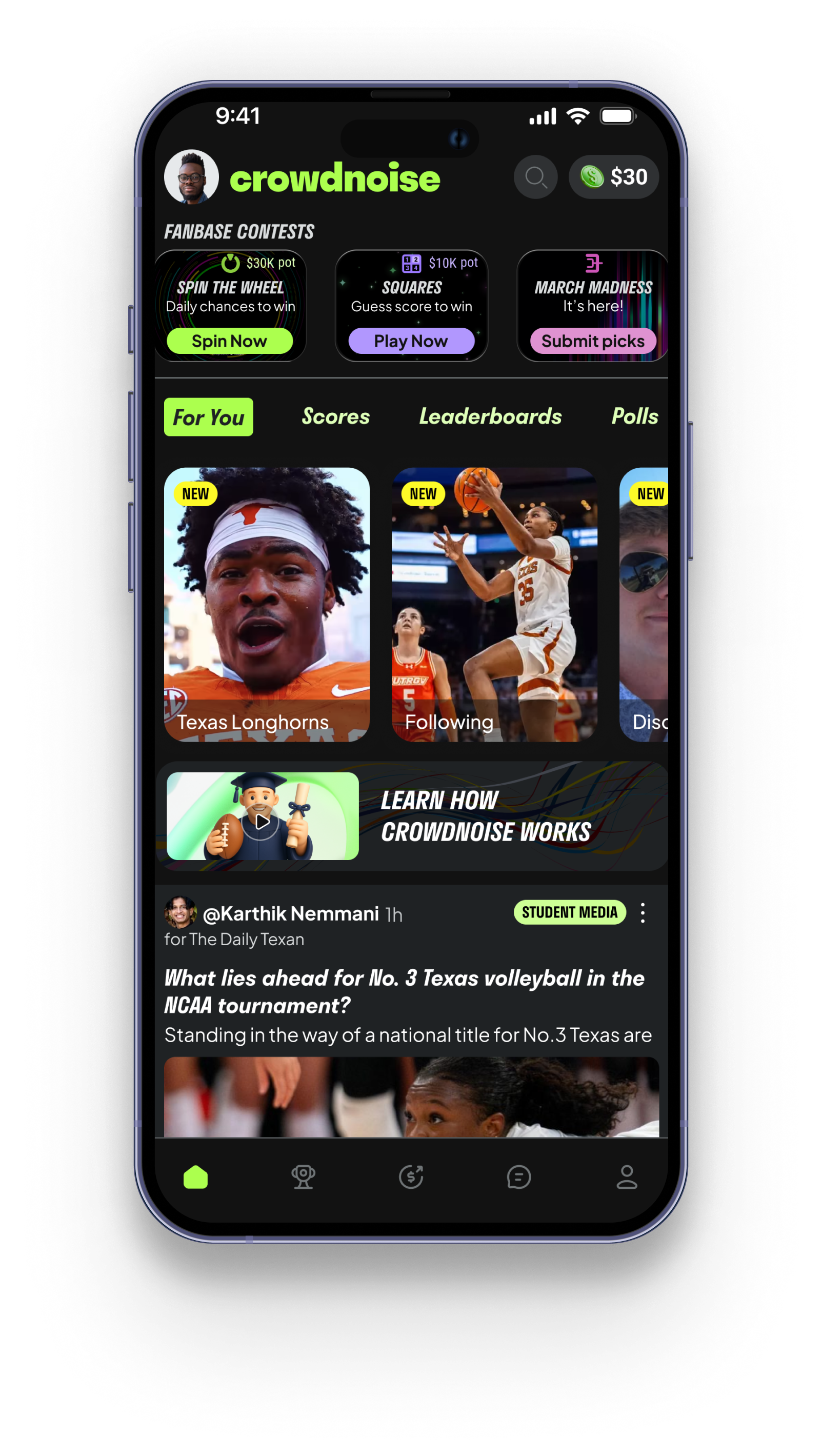
Fans can track how they stack up daily, weekly, and seasonally, reinforcing commitment and deepening loyalty.

Fanbase leaderboards let fans compete against other fanbases, turning school pride into measurable competition
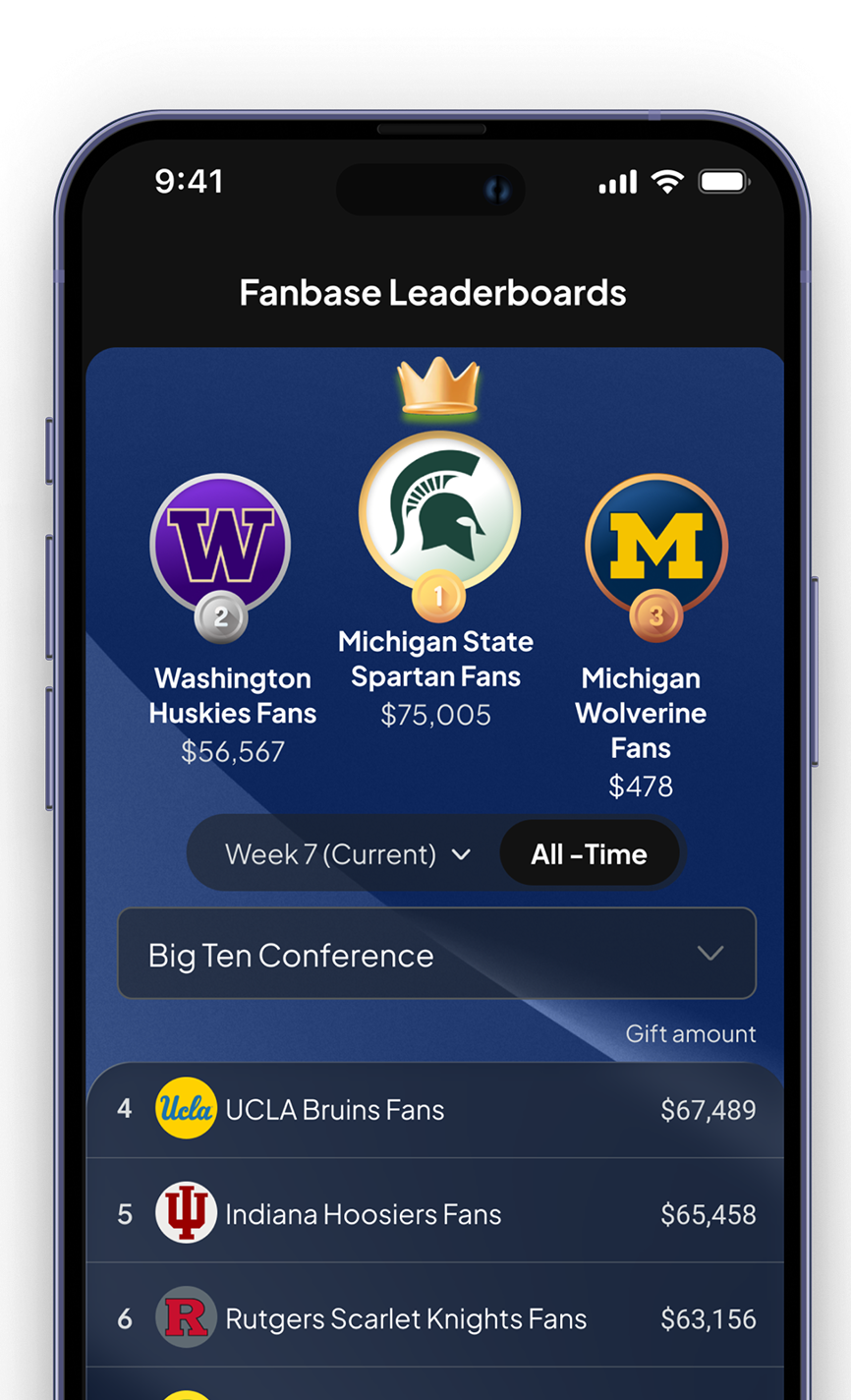
Sports-oriented contests integrate play, rivalry, and reward—driving engagement while amplifying funding outcomes.


Persistent access and simplified steps eliminate confusion, making support feel secure, trustworthy, immediate, and repeatable.
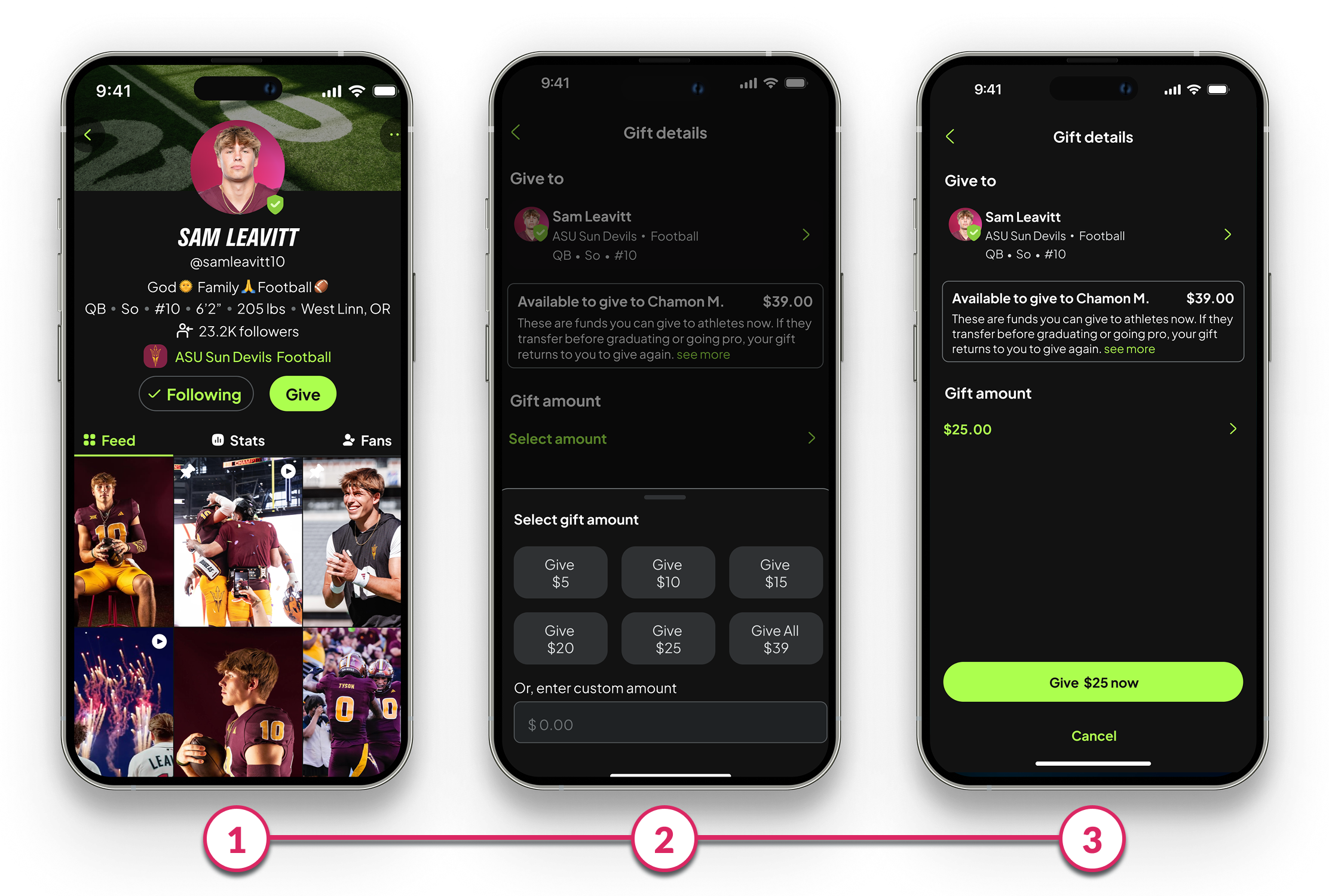
Before: Users perceived CrowdNoise as a content platform with unclear value
After: A differentiated product centered on targeted, trust-driven fan impact
By aligning the product around targeted giving and building trust into the experience, the redesign transformed CrowdNoise from an unclear concept into a cohesive, actionable platform. What was once confusing and unfocused became intuitive and meaningful, giving fans a clear way to support the athletes they care about. The result was a product positioned for real-world validation and growth.
.svg)
